

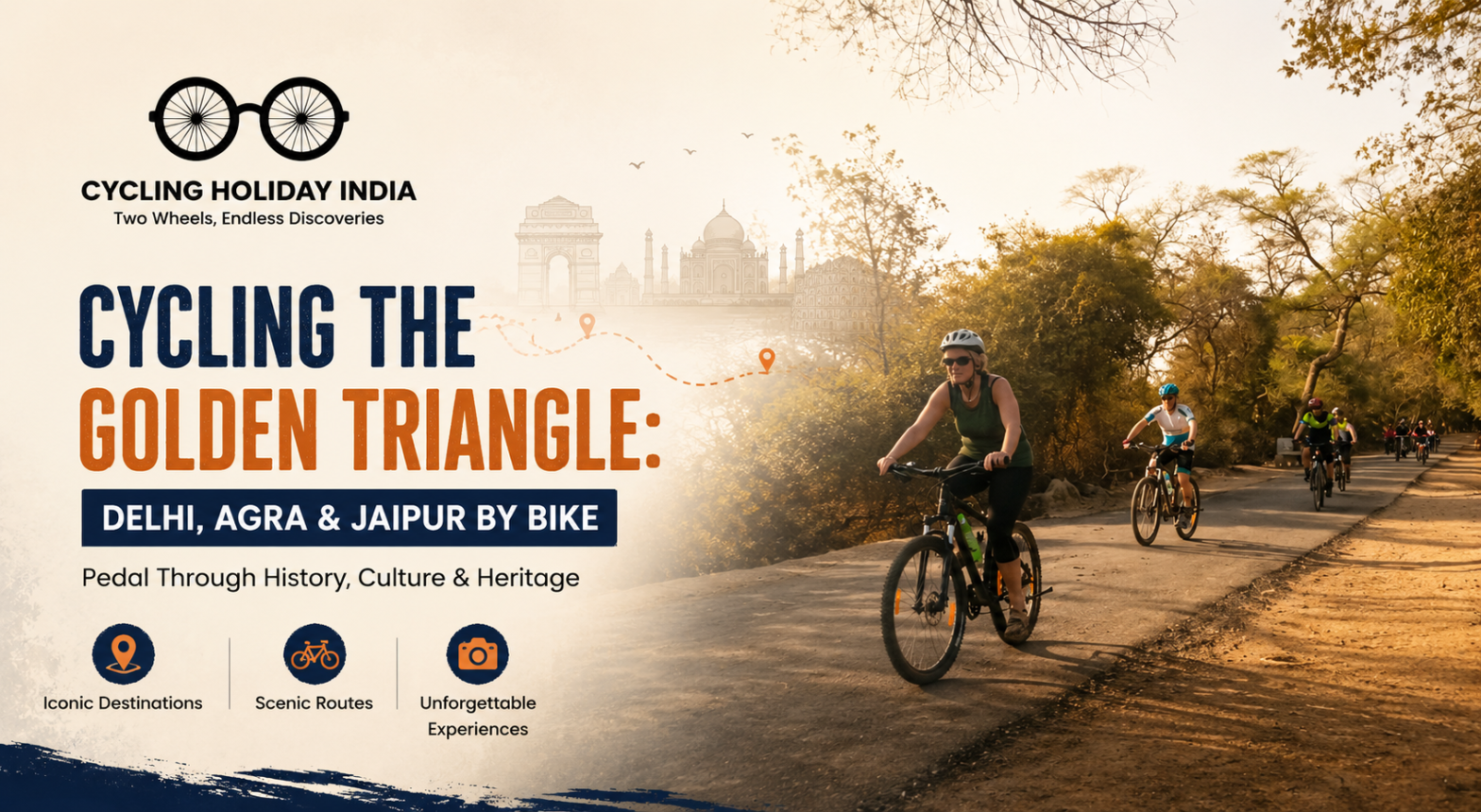
India can be overwhelming in the best possible way. There are busy streets, centuries-old monuments, colourful markets, quiet villages, incredible food and landscapes that seem to change every few hours. For travellers who want to experience more than the usual sightseeing route, exploring India by bicycle offers a completely different perspective.
The Golden Triangle cycling tour brings together three of North India’s most fascinating destinations: Delhi, Agra and Jaipur. Together, they create one of the country’s most recognisable travel circuits, connecting the historic capital, the home of the Taj Mahal and the colourful Pink City of Rajasthan.
But this is not simply about cycling between three cities. A well-planned cycling experience can take you beyond the major monuments and into the quieter side of India, where rural roads, local communities, farms and small settlements become part of the journey.
For international travellers interested in culture, history and active travel, the Golden Triangle can be an especially rewarding introduction to India.
What Makes the Golden Triangle Special?
Delhi, Agra and Jaipur each tell a different part of India’s story.
Delhi brings together layers of history from different periods, alongside the energy of modern India. Agra is closely associated with Mughal architecture and the Taj Mahal. Jaipur introduces travellers to Rajasthan’s royal heritage, colourful markets, forts and traditional crafts.
The classic Golden Triangle route generally follows Delhi → Agra → Jaipur → Delhi. The complete road circuit is roughly 700–750 km, although the actual distance covered by a cycling itinerary can vary depending on the chosen routes, sightseeing and vehicle-supported sections.
That distinction is important.
A cycling holiday does not necessarily mean riding every kilometre between major cities. Good tour planning considers traffic, road conditions, sightseeing opportunities, rider fitness and safety. Some sections may be better experienced by support vehicle, while quieter roads can provide more enjoyable cycling.
The aim is to create a journey that feels like an adventure rather than a race.
Starting the Journey in Delhi
Delhi is often the starting point for an India cycling tour, particularly for international travellers because of its major international airport and excellent connections.
The city itself deserves time before getting on the road.
Old Delhi offers an immediate introduction to India’s history and everyday energy. Narrow streets, historic buildings, markets and food stalls create a completely different atmosphere from the wide avenues of New Delhi.
Depending on the itinerary, cyclists may also explore landmarks such as the Red Fort, Humayun’s Tomb and Qutub Minar.
Rather than trying to see everything in one rushed day, a cycling-focused itinerary can allow time to experience selected areas at a comfortable pace.
This is one of the advantages of combining cycling with cultural travel. You are not simply moving from one attraction to another. You have opportunities to stop, look around and notice details that can easily be missed from a car window.
Delhi to Agra: Riding Towards the Taj Mahal
The next stage takes travellers towards Agra, home of the Taj Mahal.
The Delhi–Agra journey is one of the most established sections of the Golden Triangle, with the two cities connected by major road infrastructure.
For a cycling holiday, however, the most interesting experience may not always be following the fastest road between destinations.
A professionally designed route can use quieter roads or selected cycling sections where appropriate, allowing travellers to see more of the countryside and local life.
As you move away from Delhi, the landscape gradually changes. Urban development gives way to agricultural areas, villages and open countryside. This transition is part of what makes cycling such an interesting way to experience the region.
Then comes Agra.
Seeing the Taj Mahal after spending time travelling through the surrounding landscape can feel very different from arriving only for a quick sightseeing stop.
A sunrise visit is particularly memorable, when the changing light begins to reveal the marble details of the monument. Agra Fort is another important stop for understanding the city’s Mughal history.
For cyclists, this is also an opportunity to slow down. Not every memorable part of a cycling holiday has to happen while the wheels are turning.
Experiencing Agra Beyond the Taj Mahal
The Taj Mahal is undoubtedly Agra’s most famous attraction, but it is not the entire story.
Agra Fort provides another important connection to the Mughal period, while the surrounding region offers glimpses of everyday life beyond the main tourist sites.
Depending on the itinerary, travellers can also consider adding places such as Fatehpur Sikri between Agra and Jaipur. The historic site lies around 40 km from Agra and is commonly included as an optional stop on Golden Triangle itineraries.
For international cyclists, these additional stops can make the journey feel much more complete.
Instead of thinking of the Golden Triangle simply as “Delhi, Taj Mahal, Jaipur,” it becomes a story connecting imperial history, rural landscapes, architecture and modern Indian life.
Agra to Jaipur: From Mughal Heritage to Rajasthan
The journey from Agra to Jaipur introduces another major change in character.
As you enter Rajasthan, the architecture, colours and cultural atmosphere begin to feel different. Jaipur, known as the Pink City, is strongly associated with Rajput heritage and royal architecture.
The Agra–Jaipur section is roughly 240 km by the commonly travelled road route, although a cycling itinerary can be structured differently depending on the selected roads and supported sections.
This is where thoughtful route design becomes particularly valuable.
Rather than focusing only on distance, cyclists can be introduced to smaller roads, villages and cultural experiences along the way. These quieter sections can provide some of the most memorable moments of the journey.
Stopping at a local village, watching artisans at work or simply sharing a conversation with local people can sometimes leave a stronger impression than another major monument.
That is the real appeal of cycling India.
Discovering Jaipur by Bicycle
Jaipur is an ideal place to finish a culturally focused Golden Triangle journey.
The city combines historic architecture with a lively modern atmosphere. Amber Fort, City Palace, Hawa Mahal and Jantar Mantar are among the major attractions that can be included in a Jaipur itinerary.
Cycling around Jaipur can also reveal a different side of the city.
Early morning rides can be particularly enjoyable before the streets become busier. Depending on the route, cyclists may explore historic neighbourhoods, local markets and quieter roads around the city’s outskirts.
The experience does not have to be physically demanding all the time.
After several days of riding, a slower cultural day can provide the right balance. Travellers can visit a fort in the morning, enjoy a traditional meal, explore local crafts and spend the evening relaxing at their accommodation.
A good cycling holiday is about the overall experience, not simply the number of kilometres completed.
When Is the Best Time for a Golden Triangle Cycling Tour?
Weather matters considerably when you are spending several hours outdoors.
For Delhi, Agra and Jaipur, October to March is generally considered the most comfortable period for travel. November and February are particularly attractive for travellers looking for pleasant conditions without the more extreme temperatures of summer.
December and January can bring cooler mornings, especially in Delhi and Agra, and occasional winter fog can affect visibility.
By March, daytime temperatures begin to rise, but early spring can still be a good time for cycling before the stronger summer heat arrives.
For international travellers, choosing the season carefully can make a noticeable difference to the enjoyment of a cycling itinerary.
How Difficult Is Cycling the Golden Triangle?
The answer depends entirely on how the itinerary is designed.
The Golden Triangle is not one continuous cycling route with the same terrain throughout. Urban traffic, open countryside, road surfaces, heat and daily distances can all vary.
For this reason, cycling the Golden Triangle is better suited to travellers who have some basic cycling experience and are comfortable spending several hours on a bicycle.
However, you do not need to be an elite cyclist.
A professionally planned tour can adjust daily distances, include supported sections and provide rest periods according to the group’s ability.
For international travellers, this is one of the reasons a guided cycling experience can be preferable to attempting to plan the entire journey independently.
Why Choose a Supported Cycling Experience?
Cycling in an unfamiliar country can be exciting, but it also comes with practical challenges.
Navigation, traffic, accommodation, luggage, food, mechanical issues and route planning all require attention. A support vehicle and experienced local team can remove much of this pressure.
It also gives cyclists greater flexibility.
If someone feels tired after a long morning ride, they can use vehicle support for part of the journey. If the weather changes or road conditions become unsuitable, the itinerary can be adapted.
This is particularly valuable for international travellers who want an active holiday without having to manage every logistical detail themselves.
The best Golden Triangle by bike experiences therefore combine independence and adventure with the reassurance of local support.
What Can You Expect From Cycling Delhi, Agra and Jaipur?
Expect variety.
One day may begin among the historic streets of Delhi. The next may take you through agricultural landscapes towards Agra. Later, the scenery changes again as you approach Rajasthan and its colourful villages, forts and palaces.
You can expect some busy roads, particularly around major cities. You can also expect quieter stretches where the pace slows down and the landscape opens up.
You may see farmers working in fields, families travelling between villages, roadside tea stalls and local markets. These ordinary moments are often what make an India cycling tour feel personal.
You should also expect India to surprise you.
Not every day will look exactly as planned, and that is part of the adventure. A flexible attitude, suitable preparation and an experienced cycling team can help turn those unexpected moments into part of the story.
Is the Golden Triangle Suitable for International Cyclists?
Yes, particularly for travellers who want to combine active travel with cultural exploration.
The Golden Triangle is already one of India’s best-known travel circuits, so accommodation, transport and sightseeing infrastructure are well established.
The key is choosing an itinerary designed specifically for cyclists rather than simply adding bicycles to a conventional sightseeing tour.
A cycling-focused itinerary should consider daily riding distances, road conditions, rest time, luggage transfers, mechanical support and opportunities for cultural interaction.
That attention to detail can turn a standard sightseeing journey into a much more immersive holiday.
Making the Golden Triangle More Than a Sightseeing Trip
The greatest advantage of exploring Delhi, Agra and Jaipur by bicycle is the opportunity to experience the spaces between the famous attractions.
A conventional itinerary may take you from one hotel to another and from one monument to the next. Cycling slows that movement down.
You notice the landscape changing.
You see villages rather than simply passing them.
You can stop for photographs, speak with local people and experience the countryside at a human pace.
For travellers who have already visited major European destinations or are looking for something more meaningful than conventional sightseeing, this can make the Golden Triangle feel entirely different.
Conclusion
A Golden Triangle cycling tour offers much more than a way to visit Delhi, Agra and Jaipur.
It combines some of India’s most important historical landmarks with rural landscapes, local communities and the freedom of travelling by bicycle. From Delhi’s layered history to Agra’s Mughal heritage and Jaipur’s royal character, every stage brings a different experience.
The most rewarding approach is not to focus only on how many kilometres you can ride. Instead, think about what you want to discover along the way.
With carefully selected cycling routes, suitable support and enough time to enjoy the cultural highlights, the Golden Triangle can become an unforgettable introduction to cycling Delhi Agra Jaipur.
For international travellers looking for an active way to experience India’s history and culture, this is a journey where the road itself becomes part of the adventure.
FAQs
1. What is a Golden Triangle cycling tour?
A Golden Triangle cycling tour combines cycling with cultural exploration across Delhi, Agra and Jaipur. Depending on the itinerary, travellers may cycle selected sections between the cities and through surrounding rural areas while using support vehicles for longer or busier sections.
2. Is the Golden Triangle suitable for beginner cyclists?
It can be, depending on the itinerary. Beginners should choose a professionally supported tour with manageable daily distances, rest opportunities and vehicle assistance. Some previous experience with longer rides is recommended.
3. What is the best time for cycling Delhi, Agra and Jaipur?
October to March is generally the most comfortable season. November and February are particularly good choices for travellers looking for pleasant conditions for outdoor activities and sightseeing.
4. How long should I spend on a Golden Triangle cycling holiday?
A standard Golden Triangle trip can be completed in several days, but a cycling-focused journey benefits from a slower pace. Allowing around a week or more gives you greater flexibility for cycling, sightseeing, rest and cultural experiences.
5. Why choose cycling instead of a conventional Golden Triangle tour?
Cycling allows you to experience more than the major monuments. You can travel through rural landscapes, notice everyday life, stop in smaller communities and experience the changing scenery at a slower pace. It is particularly appealing to travellers who want culture and active adventure in the same holiday.